Friday, May 27, 2022

Hank's World


Isaiah 40:1 Comfort, O comfort My people, says your God.

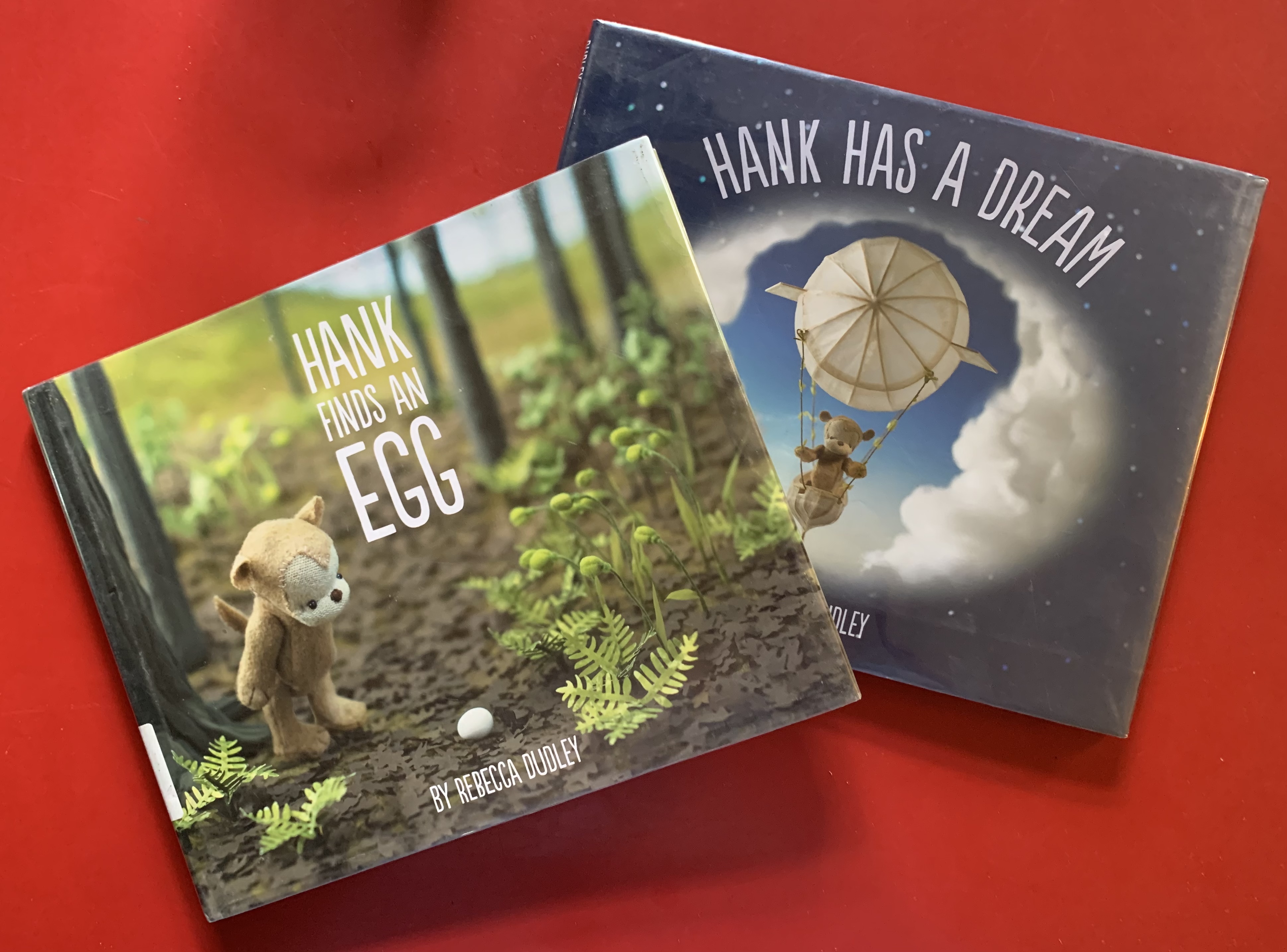
After this month’s massacres in Buffalo, New York & Uvalde, Texas, I read again Rebecca Dudley’s beautiful books and thought how they might be a comfort to a child, a group of children, and even adult readers. The first book is about being lost, found, gently cared for, and then returned. We hope we are the ones doing these things, but sometimes we are the ones who are lost.

Dudley’s 2nd book is about a dream place. The dream seemed like heaven to me or at least an afterlife place. I’m not inclined to imagine the afterlife much (I do believe there is one), but this book was so comforting to me, especially with traumatized children in mind. Whether presented about the afterlife or not, it is a comforting book. With all this in mind, it seemed appropriate to post about these 2 books this week. Here's a link to a short YouTube demo video of Dudley’s amazing art process. Consider showing it to your audience. You all will want to crawl in her world and cuddle up!

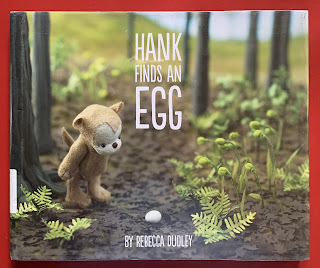
Picture Book: Hank Finds an Egg

Author: Unlike her 2nd book, this book is wordless.

Illustrator: Rebecca Dudley

Summary: Hank is a little bear who, while wandering through a woods finds a hummingbird’s egg on the ground. He gently picks it up and then quickly finds the nest where it belongs. 
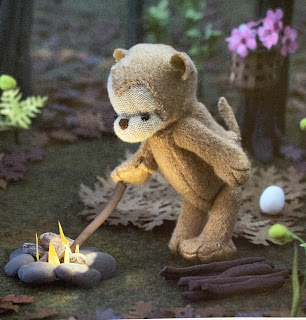
Hank struggles to keep the egg warm and figure out how to return it. He is not a big bear. With amazing ingenuity and perseverance, Hank returns the egg and is beautifully thanked by a parent hummingbird and later by the little bird right after its birth.

Hanna’s Comments: This artist is an architect who creates every component of her magical Storywoods. Watch her video and be entranced.

Original Publisher: Peter Pauper Press, 2013

Age Appropriateness: 2 and up

Formats other than Book: None at present

Scripture Connections: This book connects well with the lost parables in Luke 15 and The Good Samaritan in Luke 10. They could even be tied to Jesus’ healing stories for those he healed (and the people who loved them most) were certainly lost in the circumstances of illness.

PBT Applications: Cuddle in together with this wordless book after a difficult week and talk to children about what makes them feel lost. Then talk about how God, Jesus, The Holy Spirit, or kindhearted people help us find our way back to what is more comfortable and normal.
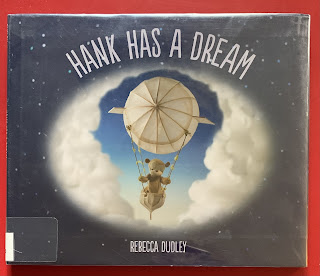

Picture Book: Hank Has a Dream

Author/Illustrator: Rebecca Dudley

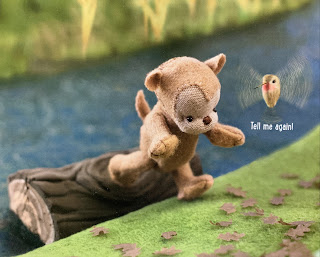
Summary: Hank meets up with the little hummingbird baby of the first book (above) and says, “Last night I dreamed I flew! I was all by myself, but I wasn’t scared."  


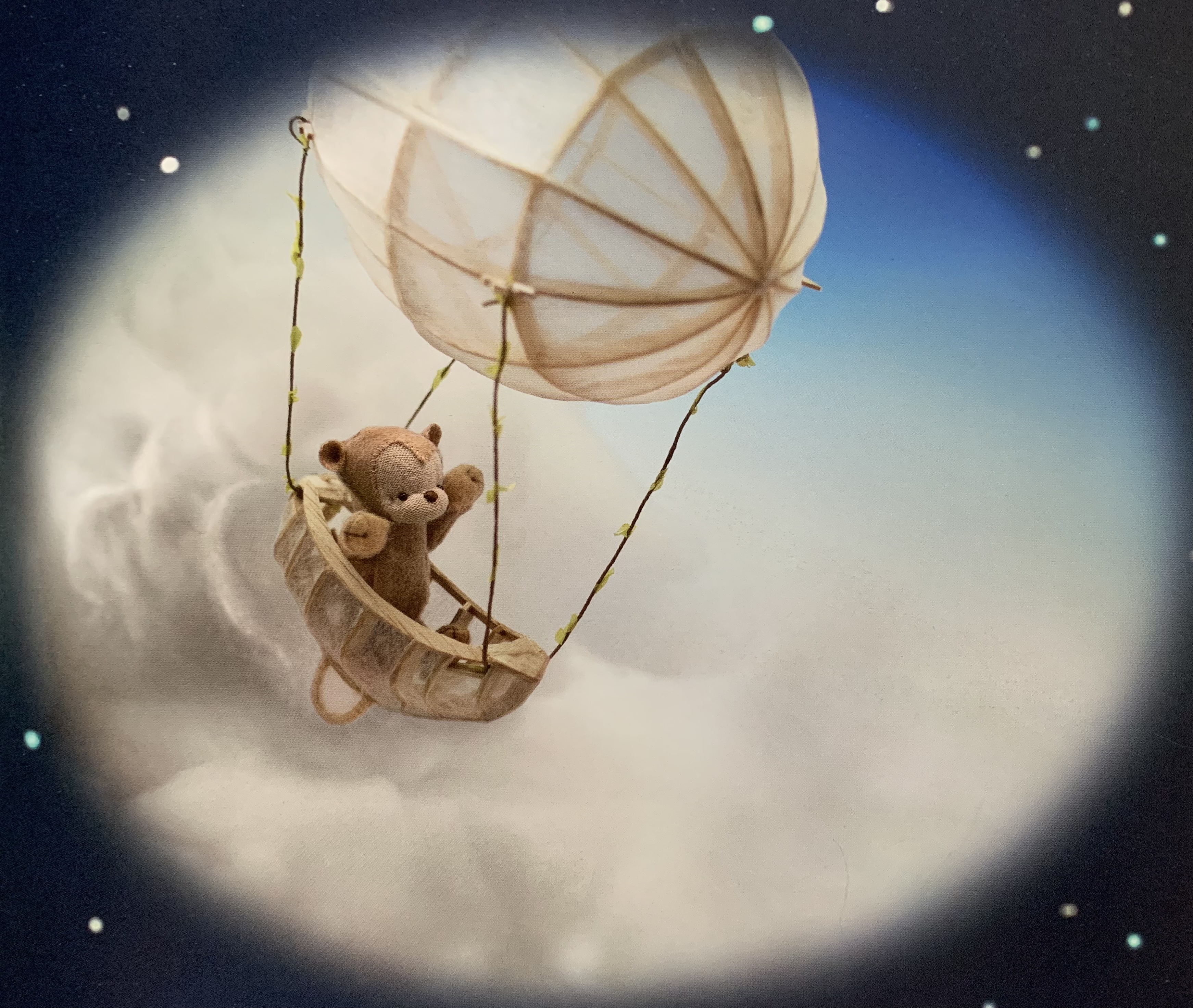
Then the readers see (as Hank and his friend mimic) beautiful images of Hank flying in a hot air balloon, following a path to the ocean and over the clouds. There he floats peacefully. It ends with Hummingbird wanting to hear about the dream again!   

Hanna’s Comments: See above in the intro. to this post. If this book doesn’t offer an image of the afterlife for you, no worries. Talk about the biblical concept of peace. Talk about how dreams have been viewed as a way for God to gives us messages. Encourage your audience to wonder about that.

Original Publisher: Peter Pauper Press, 2014

Age Appropriateness: 3 and up

Formats other than Book: None at present

Scripture Connections: This book will connect with Jacob’s dream in Genesis 28, Joseph’s interpretation of dreams in general (Genesis 40 & 41), and any verses about the afterlife. It also connects to any scripture about peace or peaceful places. You could also talk about the importance of listening to a friends dreams - bedtime dreams or dreams of the future. 

PBT Applications: Read this book to children who have had an encounter with death either directly or in the news. Do not present this as an image of heaven or the afterlife. Instead, encourage positive talk about the dream place and offer up wonderings about whether heaven or the afterlife is like Hank’s dreams.

Saturday, May 21, 2022

A Book about Different Abilities and More!

Now and then a book moves me in ways beyond what the creator/s may have intended. Today’s featured book is one of those. When I read it, I wanted to talk about it with many people. I knew you would be part of my imaginary conversations!

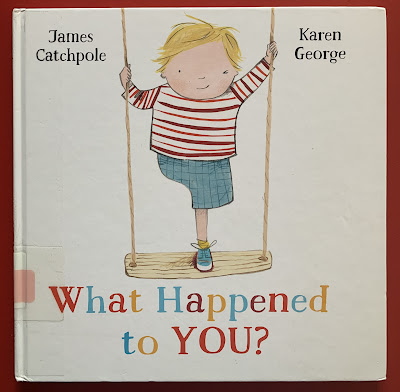
Picture Book: What Happened to You?

Author: James Catchpole

Illustrator: Karen George 

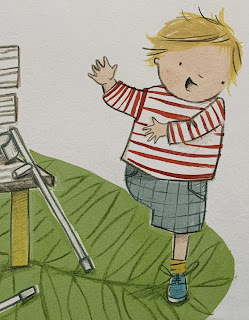
Summary: This beautiful story is from the point of view of Joe, a young boy who has one leg. Before the story begins, you see Joe tossing aside his crutches. Then he skillfully plays a favorite game on a balance beam - a game that involves imaginary sharks. Next this powerful sentence appears: Sharks were easy compared to kids Joe hadn't met yet. WOW! Spend some time here!

An outspoken and curious young girl, who we later learn is Simone, comes to Joe, declares the obvious, and asks the title question. 
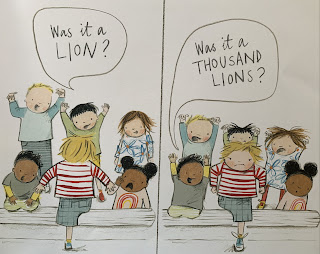
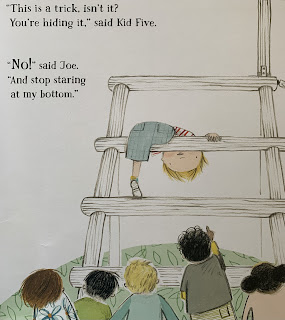
Surprisingly, Joe replies, "What do you think?" Simone guesses and questions more. Other children join in. Joe answers their creative guesses while adeptly climbing. Eventually, you have this: 
Spend some time here also. 

Then Simone finally joins Joe. They say their names and play together imaginatively. Others join in. I wonder what would have happened if Simone had begun their friendship this way. The story ends with Simone asking if Joe "gets bored of that question about your leg, that you don't have." Again, Joe asks what she thinks and if she still needs to know what happened. Simone answers, No!" Joe likes that answer.

Hanna’s Comments: The cover of this book is subtle, then striking so I would begin a reading by allowing your audience to react silently. The power of this book is Joe's deep hurt and frustration. He just wants to play - in amazing ways! Talk about how some people can skillfully hide their hurt and frustration.

I was struck with how Joe's response to the title question parallels the response many Americans who are non-white experience when those in the white majority (I'm in this category), insensitively ask questions or expect explanation & affirmation. I know I have much to learn! It is not the responsibility of my non-white acquaintances and friends to be my teachers.

At the end of the book is a letter from the author to parents about how children want to know all about every disabled person they see. Read this to yourself no matter your parental status. James Catchpole has one leg so his letter is particularly instructive. He explains that people with disabilities don't want to be everyone's teachable moment. 


I have recently discovered a book series called A First Look at.... This series has a similar book titled Don’t Call Me Special: A First Look at Disability by Pat Thomas & Lesley Harker. It is not a story. Instead it explores experiences and poor assumptions people make about people with differing abilities. The book series offers valuable entry points on a large variety of topics. Every few pages, they offer excellent questions for reflection. For a list of books in the series, check the website here. You might choose not to read one of these books aloud but instead allow it to bring you to more a sensitive understanding, design an activity, or help you anticipate issues that might arise.

Original Publisher: Faber & Faber, 2021

Age Appropriateness: 4 and up

Formats other than Book: None at present


Scripture Connections: The self-righteous Pharisee - who judges the tax collector (Luke 18:9-14); Zacchaeus - who was a climber in a tree, feeling very different & alone (Luke 19:1-10); the Syrophoenician woman - who was judged harshly by Jesus, After she challenges him, he commends her and grants her prayer request. (Mark 7:24-30); The Fruits of the Spirit (particularly kindness, gentleness, and self-control) Contrast these to the children's approach to Joe (Galatians 5:22-23). More generally, let Jesus and early Christians be examples of empathically & respectfully approaching a person with differences. This happens with the Ethiopian (Acts 8:26-40) and the woman who touched Jesus' clothing (Matthew 9, Mark 5, Luke 8).

PBT Applications: Start a small group of parents with young children who choose to read together Oprah & Bruce D. Perry’s recent book of the same name. 

This book for adults was my favorite non-fiction book of 2021. It reorients readers away from the common question: “What’s wrong with you?” I recommend the audio version because it is, like the subtitle says, conversations between Dr. Perry & Oprah. Also, having the text on hand is helpful because of the visual content. 

My PBT application is to let the reading of this picture book start your group’s time together. The title question will become a point of reference and broaden the focus, not just on trauma, but also on disability and other differences. This picture book beautiful shows, “What happened to you?” can be an insensitive and damaging question coming from the wrong person or the wrong kind of relationship. What I have learned, thanks to this little picture book, is that it is a question best held delicately with caution and empathy and perhaps not asked at all.   


Wednesday, May 11, 2022

What Birds Teach Us

Picture Book: Ruby’s Birds

Author: Mya Thompson

Illustrator: Claudia Davila

Summary: This beautiful book is from the point of view of Ruby, a girl who is 6 or so. She is about to discover the wild side of NYC! Her neighbor, Eva, offers to take Ruby to the park. Ruby assumes they are going to her play place in Central Park, but instead they are going into the forest there. On their way they sing (Ruby loves to sing – this is important!). She’s not sure what to do when they sit quietly so she bursts into song again. 


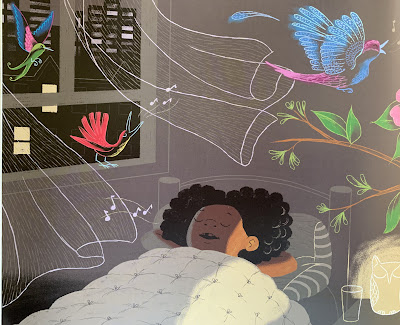
Eva gets a bit upset because she had just spied a golden-winged warbler, a bird species that Eva saw often in her home country of Costa Rica. Eva explains that Central Park is an excellent place to birdwatch. The birdwatching continues, more quietly. They don't again see the warbler that day, but Eva insists that Ruby now knows what to do to spy another one: Pay attention, move carefully, and be quiet. Ruby is already hooked! She dreams of birds after singing herself to sleep. She teaches her family about birds and birdwatching. Birdwatching becomes her very own practice.


Hanna’s Comments: Birdwatching is a lot like prayer. With a particular orientation, it can be a contemplative practice that calms, grounds, and leads us to praise. In recent years, I have discovered the contemplative and emotionally grounding aspects of birdwatching. The many birds in my feeders have helped me tremendously during the anxious days of the pandemic! I even laugh aloud sometime! Truly they are some of God's most extraordinary gifts. They are delightful to watch, but there can also be stark reminders of wild living that I don’t like to see, like violence, flying into windows & doors, and deaths that sometimes occur. Although such experiences are harder to witness, I know they are a part of creation so they should not be avoided topics of conversation should children mention them.

Because birds, like Ruby, sing so much, spend some time talking about the worship aspects of singing, particularly with concepts such as praise, awe, and gratitude. Ask children a wonder question about why they think birds sing. 

This book has an amazing number of resources in the back! First, the context of the story and some info. about warbler migration are given. Next you’ll find information about 2 key birds in the story. There is a chart listing the 14 bird species found in the illustrations. Last you have Ruby's Tips for Taking a Nature Walk. This page could be used independently on a guided nature walk later. 

Jesus tells us not to worry and references sparrows in Matthew 6:26. The concept of worrying is so important now thanks to the pandemic that I plan to do a PBT post soon that will feature several books about worrying. If you want to know now which books I plan to feature, contact me.

Original Publisher: Scholastic & The Cornell Lab Publishing Group (It is through Cornell that much excellent bird research is funded!)

Age Appropriateness: 4 and up

Formats other than Book: None at present

Scripture Connections: You may think of a couple of commonly known biblical references to birds such as, “Look at the birds of the air, they neither sew nor reap...” (Matthew 6:26) and Jesus' longing to gather his people like a hen gathers her chicks (Matthew 23:37), but there are many scriptures that reference birds! A general search engine will help you find more. Here's one I just found: Ask the birds of the sky and they will tell you. (Job 12:7)

Connections to The Revised Common Lectionary: I listed this book along with several others about birds in my Trinity Treasures Preschool Curriculum. It’s 3 years of lessons based on the lectionary. Each lesson features a list of recommended picture books. This book is for the lesson in Year B. The theme is God’s Goodness. God’s gifts of birds, flowers, and fruit are the focus. They are all mentioned in Song of Solomon 2:8-13.

PBT Applications: A couple of weeks ago I featured a book about listening. Today's book (and any book about birdwatching or nature walks) would connect with the spiritual practice of listening. However, you can also celebrate God’s diverse plan for our world by reading this book and focusing on the incredible diversity of birds in the world. I suspect you could easily create a game or art project that celebrated God’s feathered gifts. For adults or teens, ask them to tell you a parable or personal story in which a bird's presence or behavior was an important lesson.

Links to other PBT books about birds: 

How to Heal a Broken Wing

Bear and Bird

Sing...Sing a Song!


Froodle


Washing the Willow Tree Loon


Albert


Mama Outside, Mama Inside


The Birds of Bethlehem


Is This Panama?


Baby Wren and the Great Gift